
Real-World MCP Security Use Cases: Protecting Data, Tools, and Integrations
Protect MCP implementations with proven security strategies. Prevent tool poisoning, secure credentials, and defend AI integrations.

Model Context Protocol (MCP) connects AI systems to external tools, databases, and APIs. As organizations rapidly adopt MCP for AI-powered workflows, security teams face new challenges in protecting sensitive data and preventing unauthorized access. Understanding real-world MCP security use cases helps organizations implement effective defenses before attackers exploit vulnerabilities.
What Is MCP Security?
MCP security encompasses the practices, controls, and architectures that protect Model Context Protocol implementations from attacks. MCP servers function as bridges between AI models and enterprise infrastructure, handling authentication tokens, database credentials, and API keys for connected services.
When an AI agent queries a database, sends an email, or accesses cloud resources, MCP facilitates that communication. A compromised MCP server grants attackers access to every system that the server can reach, making MCP security essential for any organization deploying AI agents.
Protecting Data
MCP servers handle sensitive information, including customer records, financial data, and proprietary business intelligence. Without proper controls, these servers can expose internal databases and proprietary data to unauthorized access.
Effective data protection strategies include:
- Encrypting all MCP traffic using TLS 1.3
- Implementing strict access controls that limit data exposure to authorized queries
- Monitoring data access patterns for anomalies
- Storing credentials in secure vaults rather than MCP server configurations
- Rotating tokens regularly to limit exposure windows
Organizations should also implement data classification policies that restrict MCP server access based on sensitivity levels. An MCP server supporting a sales application should access sales data exclusively, not financial records or employee files.
Protecting Tools
Tool poisoning attacks represent one of the most significant MCP-specific threats. Attackers embed hidden instructions in MCP tool descriptions that manipulate AI behavior, causing agents to exfiltrate data or execute unauthorized actions without user awareness.
Academic research from Queen's University analyzed 1,899 open-source MCP servers and found that 5.5% exhibited MCP-specific tool poisoning attacks.
Defend against tool poisoning with these measures:
- Implement validation workflows that verify tool descriptions before deployment
- Alert security teams when descriptions change unexpectedly
- Pin tool versions to prevent unauthorized modifications
- Require human approval before adding new MCP servers to production environments
- Follow API authentication best practices to prevent unauthorized access to MCP endpoints
Protecting Integrations
MCP servers often connect multiple systems, creating complex trust relationships between AI agents, databases, cloud services, and third-party APIs. Cross-origin escalation attacks exploit these relationships, allowing malicious MCP servers to shadow trusted tools and hijack functionality across multiple integrations.
Secure your integrations with layered defenses:
- Require authentication between all MCP components using API keys, tokens, or mutual TLS certificates
- Implement BOLA detection and prevention to enforce object-level authorization across connected systems
- Isolate MCP servers in dedicated network zones with strict egress controls
- Monitor all cross-system communication for unauthorized data flows
Network segmentation limits blast radius when compromises occur. Applying security-first design principles helps embed these controls from the start.
Advantages of Strong MCP Security
Organizations implementing robust MCP security gain measurable benefits:
- Reduced breach risk: Proper authentication and encryption prevent unauthorized access to connected systems and sensitive data stores.
- Protected AI workflows: Validated tool descriptions ensure AI agents execute intended actions without malicious manipulation.
- Compliance alignment: Strong credential management and audit logging support regulatory requirements for data protection.
- Maintained operational trust: Secure MCP implementations preserve confidence in AI-powered business processes.
- Limited blast radius: Network segmentation and least-privilege access contain potential compromises to isolated components.
Risks of Unsecured MCP Deployments
Failing to secure MCP implementations exposes organizations to serious threats:
- Data exfiltration: Exposed MCP servers provide attackers with access to databases, cloud services, and internal APIs.
- Tool poisoning attacks: Hidden instructions in tool descriptions manipulate AI agents into unauthorized actions or data theft.
- Credential theft: Compromised servers expose OAuth tokens and API keys, enabling lateral movement across connected services.
- Cross-origin escalation: Malicious MCP servers can shadow trusted tools, hijacking functionality across multiple integrations.
- Compliance violations: Unencrypted traffic and missing authentication controls create regulatory exposure for sensitive data.
MCP Security Solutions and Best Practices
Enable Comprehensive Logging
Log every action the MCP servers perform. Send logs to centralized SIEM systems for analysis. Monitor for unusual data access volumes, requests at unexpected times, or calls to sensitive endpoints from new sources. Review authentication logs for anomalous access patterns indicating credential compromise.
Require Human Approval for High-Risk Actions
Build approval workflows for sensitive operations. Require human confirmation before AI agents modify production data, transfer funds, or access restricted resources.
Implement Continuous Testing
Automated security testing should validate MCP configurations against known attack patterns. Test for authentication bypass, broken access control, and prompt injection vulnerabilities on every deployment.
Build Your MCP Security Skills
Want to master MCP and API security? APIsec University offers free courses on API penetration testing, OWASP API Top 10, and MCP security fundamentals. Join over 120,000 security professionals building expertise in API protection.
Ready to automate your API security testing? APIsec continuously tests your APIs for vulnerabilities, including authentication flaws, broken access control, and business logic attacks. Start your free trial and secure your APIs before attackers strike.
FAQs
What is Model Context Protocol (MCP)?
MCP is an open protocol from Anthropic that standardizes how AI systems connect to external tools, databases, and services through a unified interface.
How do tool poisoning attacks work?
Attackers embed hidden instructions in MCP tool descriptions that manipulate AI behavior, causing agents to exfiltrate data or execute unauthorized actions.
What vulnerabilities does MCP create?
MCP servers create endpoints vulnerable to authentication bypass, broken access control, credential theft, and prompt injection attacks.
How can organizations secure MCP implementations?
Apply authentication to every component, store credentials securely, implement least privilege access, validate tool descriptions, and monitor all activity.
Why is MCP a growing security concern?
MCP adoption is accelerating as organizations deploy AI agents, but the protocol lacks built-in authentication and encryption, creating exploitable attack surfaces.
What is cross-origin escalation in MCP?
Malicious MCP servers shadow trusted tools and hijack functionality, allowing attackers to escalate privileges across multiple connected systems and integrations.
Latest Articles
Buy, Build, or Open Source? Stretching a Security Budget That Won’t Stretch
Running a security program is expensive, and Finance keeps saying no. Before you take up goose farming, here’s how to choose between buying, building, and open-source tools.
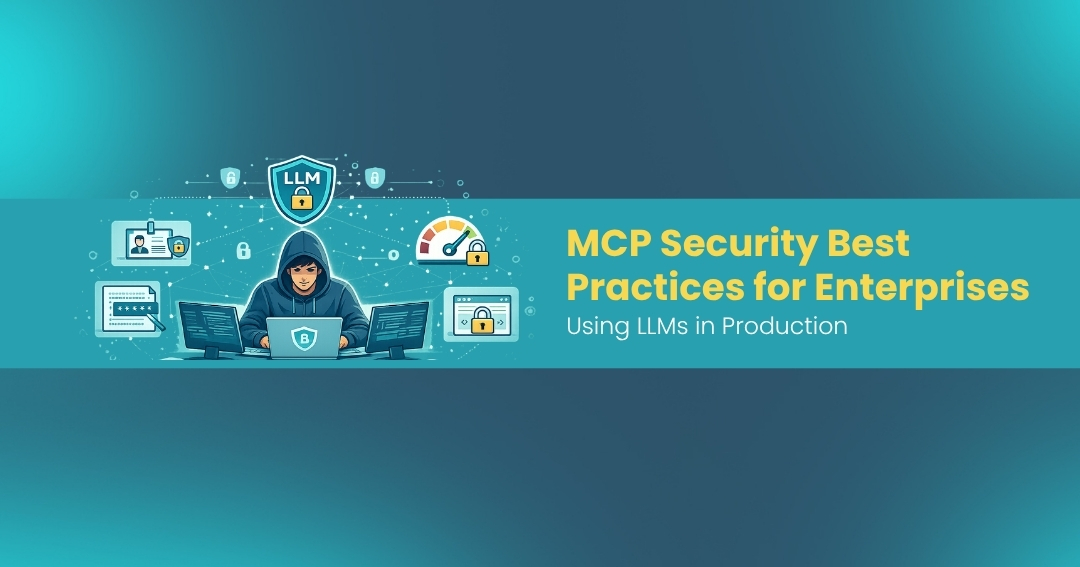
MCP Security Best Practices for Enterprises Using LLMs in Production
Secure your MCP servers with proven practices. Prevent tool poisoning, credential theft, and prompt injection in enterprise AI systems
How MCP Security Skills Boost Your Cybersecurity Profile
MCP security skills help cybersecurity professionals stand out. Build expertise in tool poisoning, prompt injection, and AI agent security.
Buy, Build, or Open Source? Stretching a Security Budget That Won’t Stretch
Running a security program is expensive, and Finance keeps saying no. Before you take up goose farming, here’s how to choose between buying, building, and open-source tools.
MCP Security Best Practices for Enterprises Using LLMs in Production
Secure your MCP servers with proven practices. Prevent tool poisoning, credential theft, and prompt injection in enterprise AI systems
Earn your APIsec University Certificate
Earn an APIsec University certificate and badge for completing any of our courses.
Post your badge on LinkedIn and share your accomplishments. You can even receive CPE credits for taking these courses.


