
From API Security to MCP Security: Skill Path for Modern Security Engineers
Security engineers can build MCP security skills from API expertise. Master key vulnerabilities, tools, and career steps for AI agent security.
Your API security skills are more valuable than ever. The Model Context Protocol (MCP), launched by Anthropic in November 2024, has become the standard way AI agents connect to databases, APIs, and external tools. Security teams now face a new challenge: protecting these AI integration points from attacks that traditional tools cannot detect.
The good news? API security expertise translates directly to MCP security. Authentication testing, injection detection, and access control validation all apply to MCP environments. The difference lies in understanding how attackers manipulate AI behavior through prompt injection and tool poisoning.
Why API Security Professionals Should Care About MCP
MCP is rapidly becoming the standard protocol for connecting AI coding agents to external tools and data sources. According to research from Queen's University, 7.2% of the 1,899 open-source MCP servers analyzed contain general vulnerabilities, while 5.5% exhibit MCP-specific tool poisoning.
The connection between API security and MCP security is direct. MCP servers expose endpoints, handle authentication, and process requests from clients. However, MCP introduces a critical difference: LLMs treat text as instructions and follow whatever input they receive. API transactions are predictable, while MCP transactions involve an AI agent that can be manipulated through prompt injection and tool poisoning.
Security engineers who understand OWASP API Top 10 vulnerabilities, authentication flows, and access control patterns already possess most foundational knowledge needed for MCP security work.
Core API Security Skills That Transfer to MCP
Your existing API security skills provide direct value in MCP environments.
- Authentication and Authorization Testing. OAuth flows, token scope validation, and access control testing translate immediately to MCP. The June 2025 MCP specification now requires OAuth 2.1 tokens at the transport layer, making experience with token validation directly applicable.
- Input Validation and Injection Testing. SQL injection, command injection, and parameter tampering experience applies to MCP servers. JFrog Security Research discovered CVE-2025-6514, a critical vulnerability in the mcp-remote npm package affecting over 437,000 downloads that allowed arbitrary command execution through unsanitized OAuth discovery fields.
- Business Logic Flaw Detection. MCP introduces complex logic vulnerabilities through tool chaining. An AI agent might combine multiple tools in unexpected ways, creating attack chains that individual tool testing would miss. Experience finding business logic flaws in API sequences prepares security engineers for MCP challenges.
New Skills Required for MCP Security
While API security skills transfer well, MCP security requires additional competencies.
- Prompt Injection Detection. Prompt injection represents MCP's equivalent of SQL injection, but with broader impact. Attackers embed malicious instructions in data processed by the LLM. A malicious prompt can trick systems into exposing database schema details, customer data, or internal logs. Building detection skills requires studying documented injection techniques and testing how different LLMs respond to embedded instructions.
- Tool Poisoning Analysis. Tool poisoning occurs when attackers manipulate descriptions or behaviors of MCP tools. Invariant Labs documented how hidden instructions in tool descriptions can manipulate AI models into performing unauthorized actions without user awareness. Understanding tool poisoning requires analyzing how tool descriptions influence LLM behavior and identifying tool shadowing attacks.
- Supply Chain Security for AI Components. MCP servers introduce new supply chain risks where attackers distribute malicious packages appearing legitimate. Docker's security research documented how CVE-2025-6514 represented the first case of full remote code execution achieved against an MCP client in a real-world scenario. Building supply chain security skills involves auditing the MCP server source code before deployment and implementing allowlists for approved servers.
Advantages of Transitioning from API to MCP Security
Security professionals with API backgrounds gain several competitive advantages when moving into MCP security:
- Existing knowledge of OAuth authentication flows applies directly to MCP security requirements
- Experience with API penetration testing provides a methodology for testing the MCP server endpoints
- Understanding of OWASP vulnerabilities maps to MCP-specific attack vectors
- Familiarity with CI/CD security integration helps implement MCP security in DevSecOps pipelines
- Knowledge of secure API design principles informs secure MCP server architecture
Risks and Challenges in MCP Security
The MCP security landscape presents distinct challenges compared to traditional API security:
- Lack of Standardized Security Controls. Authentication remained optional in MCP until June 2025, leaving thousands of servers without basic protections
- Non-Deterministic Behavior. LLMs can be manipulated to perform unexpected actions, unlike predictable API transactions.
- Limited Visibility. Tool descriptions and AI reasoning processes are often hidden from users, making attacks difficult to detect
- Rapid Ecosystem Growth. The MCP ecosystem expands faster than security tooling can mature.
Building Your MCP Security Skill Path
Modern security engineers already work across cloud-native environments, CI/CD pipelines, and automated testing workflows. The transition to MCP security builds on these existing competencies.
Integrate MCP Testing into Existing Workflows
Security engineers running DAST scans against REST APIs can extend coverage to MCP server endpoints. Add MCP servers to your existing vulnerability scanning pipeline and configure authentication testing for OAuth 2.1 flows. Automated testing platforms help identify injection flaws and authentication weaknesses at scale without disrupting current DevSecOps processes.
Build a Local MCP Lab Environment
Spin up sample MCP servers using Docker containers in your existing test infrastructure. Practice prompt injection attacks against controlled environments, analyze tool descriptions for hidden instructions, and document attack patterns. Security engineers familiar with API fuzzing can apply similar techniques to MCP tool parameters.
Map Attack Pathways to Threat Models
MCP-based AI systems have three distinct attack pathways that fit into standard threat modeling frameworks:
- Client to LLM (prompt injection, context manipulation)
- Client to MCP Server (tool request tampering, authentication bypass)
- MCP Server to External APIs (privilege escalation, unauthorized data access)
Security engineers can integrate these pathways into existing threat models and security architecture reviews.
Complete Structured Training
APIsec University offers an MCP Security Fundamentals course covering real-world attack scenarios and hands-on labs. The course provides 2 CPE credits, helping security engineers meet continuing education requirements while building practical MCP testing skills.
Career Outlook and Getting Started
Organizations deploying AI agents need professionals who can assess MCP server security, design secure architectures for AI tool integration, and respond to incidents involving compromised AI agents. The shift from local-only MCP to remote MCP servers has expanded the attack surface significantly.
Security engineers with strong API testing backgrounds can develop functional MCP security skills within 2-3 months of focused learning. Mastering the full range of MCP attack vectors and defenses typically requires 6-12 months of hands-on practice.
Begin your transition with these immediate actions:
- Complete the MCP Security Fundamentals training
- Set up a test environment with sample MCP servers
- Practice identifying critical attack vectors,s including hidden instructions, tool shadowing, excessive agency, data exfiltration, and trust exploitation
- Review the API security checklist and adapt practices for MCP environments
As agentic AI transforms AppSec, the security community needs professionals who can bridge traditional application security and emerging AI agent security challenges. Your API security expertise provides a strong foundation, and the demand for MCP security specialists continues to grow.
Ready to secure AI agent integrations? Start with a free APIsec account and test your MCP server endpoints today.
View all APIsec University courses to continue building your security skills.
FAQs
What is MCP in the context of AI security?
MCP (Model Context Protocol) is Anthropic's open standard defining how large language models connect to external tools and data sources.
How does MCP security differ from API security?
APIs execute predictable code while MCP involves LLMs that follow text as instructions, making them vulnerable to prompt injection and tool poisoning attacks.
What certifications help with MCP security careers?
CISSP, CISM, and specialized API security certifications provide relevant expertise. APIsec University offers MCP-specific training with CPE credits.
How long does transitioning from API to MCP security take?
Security engineers with API testing backgrounds can develop functional MCP security skills within 2-3 months, with full mastery requiring 6-12 months.
Latest Articles
Buy, Build, or Open Source? Stretching a Security Budget That Won’t Stretch
Running a security program is expensive, and Finance keeps saying no. Before you take up goose farming, here’s how to choose between buying, building, and open-source tools.
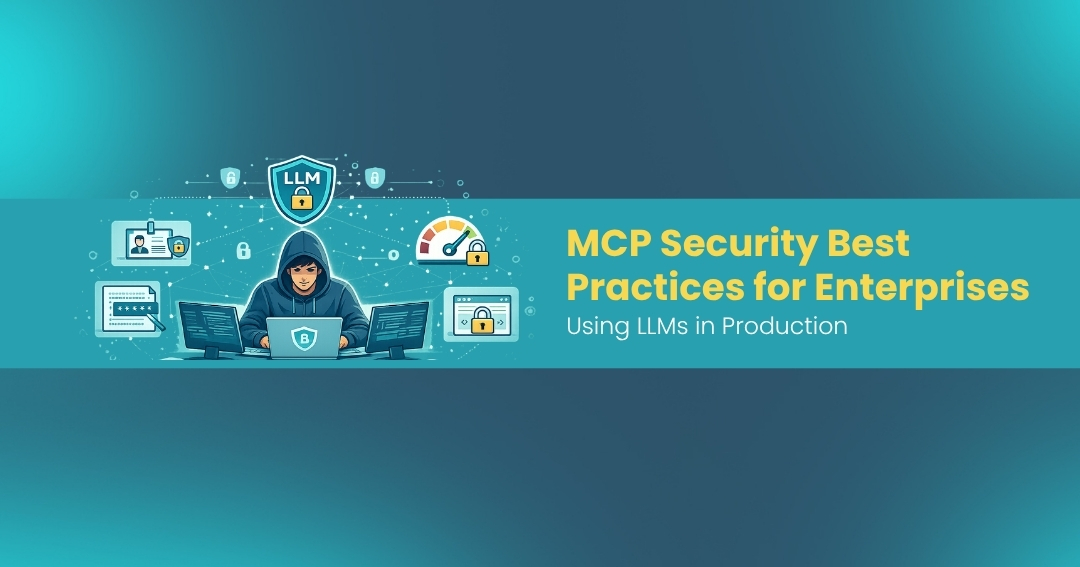
MCP Security Best Practices for Enterprises Using LLMs in Production
Secure your MCP servers with proven practices. Prevent tool poisoning, credential theft, and prompt injection in enterprise AI systems
How MCP Security Skills Boost Your Cybersecurity Profile
MCP security skills help cybersecurity professionals stand out. Build expertise in tool poisoning, prompt injection, and AI agent security.
Buy, Build, or Open Source? Stretching a Security Budget That Won’t Stretch
Running a security program is expensive, and Finance keeps saying no. Before you take up goose farming, here’s how to choose between buying, building, and open-source tools.
MCP Security Best Practices for Enterprises Using LLMs in Production
Secure your MCP servers with proven practices. Prevent tool poisoning, credential theft, and prompt injection in enterprise AI systems
Earn your APIsec University Certificate
Earn an APIsec University certificate and badge for completing any of our courses.
Post your badge on LinkedIn and share your accomplishments. You can even receive CPE credits for taking these courses.


