
MCP Security Best Practices for Enterprises Using LLMs in Production
Secure your MCP servers with proven practices. Prevent tool poisoning, credential theft, and prompt injection in enterprise AI systems
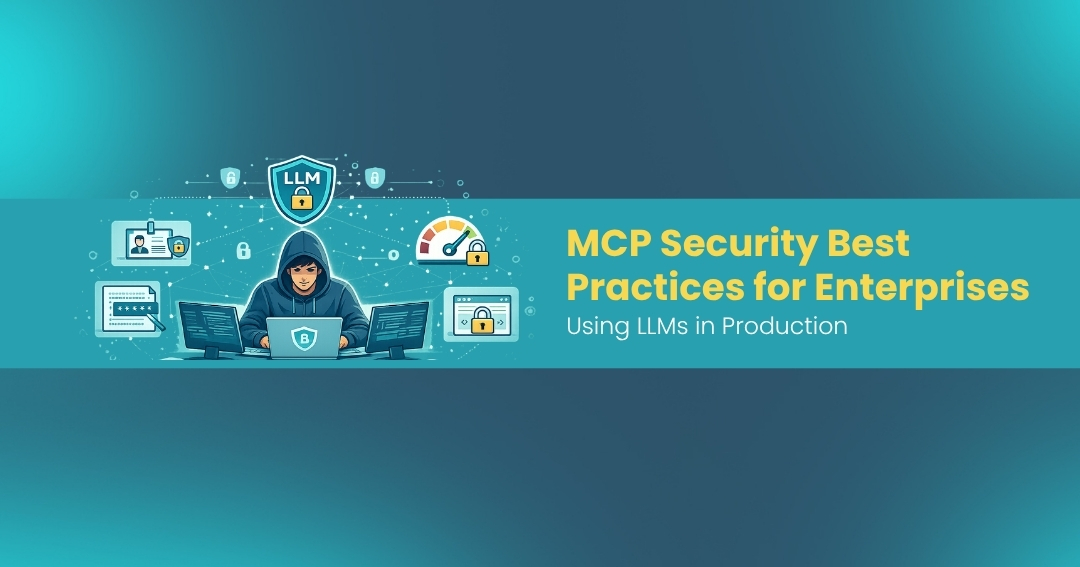
Enterprises are rapidly deploying Large Language Models (LLMs) into production environments to automate workflows, enhance customer service, and accelerate development cycles. The Model Context Protocol (MCP) has emerged as the standard for connecting these AI agents to enterprise tools, databases, and services. Without proper security controls, that same connectivity creates direct paths for attackers to access sensitive production systems.
The Growing MCP Security Gap
Anthropic released MCP in November 2024, and major players, including OpenAI, Google, and Microsoft, now support the protocol. Adoption is accelerating, but security practices have not kept pace.
According to IBM's 2025 Cost of a Data Breach Report, 13% of organizations experienced breaches of AI models or applications. Of those compromised, 97% lacked proper AI access controls. For enterprises running LLMs in production, securing MCP infrastructure is now a business-critical priority.
Why Traditional Security Falls Short for MCP
Production environments face unique security challenges. LLMs connect to live customer data, financial systems, and critical business infrastructure. Traditional security tools like firewalls and endpoint detection cannot address MCP-specific threats targeting AI agent infrastructure.
Research from Astrix Security's State of MCP Server Security 2025 report reveals critical credential hygiene problems. While 88% of MCP servers require credentials, more than half (53%) rely on static Application Programming Interface (API) keys or Personal Access Tokens. Modern authentication methods like Open Authorization (OAuth) remain underutilized at just 8.5% adoption.
Common production MCP security failures include:
- Static credentials stored in plain text configuration files
- Overly broad permission scopes connecting LLMs to sensitive data
- Shadow servers were deployed without a security review
- Missing audit logs for AI agent actions
- No human oversight for high-risk automated operations
How Attackers Target Enterprise MCP Deployments
Understanding attack vectors helps security teams protect production LLM infrastructure. Attackers exploit both the MCP protocol and common implementation weaknesses.
Tool Poisoning Attacks
Tool poisoning occurs when attackers craft malicious tool descriptions that trick production LLMs into executing unauthorized commands. Unlike prompt injection targeting user inputs, tool poisoning attacks the tool metadata itself. Poisoned tools can exfiltrate customer data or modify financial records without triggering traditional security alerts.
Prompt Injection in Production Systems
Prompt injection ranks as the number one LLM security risk according to the Open Web Application Security Project (OWASP). Production MCP environments amplify the impact because successful injections trigger automated actions across connected enterprise systems.
Credential Theft and Lateral Movement
Credential theft exploits long-lived static secrets common in enterprise deployments. Hard-coded credentials create persistent access for attackers. Once stolen, API keys provide ongoing access to production systems until manually revoked, enabling lateral movement across connected services.
Risks of Running Unsecured MCP in Production
Organizations running LLMs in production without comprehensive MCP security face serious consequences.
- Customer Data Exfiltration: Compromised AI agents with broad system access extract sensitive customer information across connected production services.
- Compliance Violations: LLMs accessing regulated data without proper controls trigger GDPR, HIPAA, or PCI-DSS penalties. Shadow MCP servers create audit gaps.
- Service Disruption: Attackers manipulate production LLMs to corrupt data or disrupt customer-facing operations.
- Reputational Damage: Breaches involving AI systems handling customer data erode trust and brand value.
How to Secure MCP for Production LLM Deployments
Securing production MCP deployments requires enterprise-grade controls across infrastructure, access management, and monitoring. Organizations building secure-by-design architectures should extend these principles to MCP infrastructure.
Apply Least Privilege Access
Restrict each production MCP server to the minimum permissions required for its specific function. Treat MCP servers as privileged production services. Implement separate service accounts, network segmentation, and enhanced logging.
Implement Human-in-the-Loop Controls
Flag high-risk production MCP operations for manual approval before execution. Actions involving customer data writes, external communications, or financial transactions should require human confirmation. The MAESTRO framework from Cloud Security Alliance addresses multi-agent security requirements.
Secure Your Production Pipeline
MCP components are executable code. Run Static Application Security Testing (SAST) on all MCP server code before deployment. Implement Software Composition Analysis (SCA) to identify vulnerable dependencies.
Sandbox Untrusted Components
Consider sandbox frameworks like gVisor or Firecracker for running untrusted MCP binaries. Isolation prevents compromised components from accessing the broader production system.
Test Production MCP APIs Continuously
Production MCP servers expose API endpoints requiring the same security testing as any enterprise API surface. Test for broken authentication, injection vulnerabilities, excessive data exposure, and business logic flaws.
From Discovery to Continuous Security Testing
A complete inventory of production MCP servers is necessary but not sufficient. The real value comes from connecting discovery to comprehensive API security testing.
APIsec generates thousands of automated attack simulations against every discovered endpoint. The platform tests for OWASP API Top 10 vulnerabilities, business logic flaws, and authentication weaknesses across your entire production MCP ecosystem.
Secure Your Production MCP Infrastructure Today
Every day without proper controls means more exposure for enterprise LLM infrastructure. APIsec combines API discovery with continuous security testing, connecting your production MCP server APIs in minutes.
Visit APIsec to start your free scan. APIsec University offers free courses, including MCP Security Fundamentals, covering tool poisoning, prompt injection, and secure deployment practices.
FAQs
What is tool poisoning in MCP?
Tool poisoning occurs when attackers embed malicious instructions in MCP tool descriptions that manipulate production LLMs into unauthorized actions.
How do I detect shadow MCP servers in production?
Monitor production network traffic for MCP protocol patterns and audit deployed services regularly. Implement infrastructure-as-code to track authorized deployments.
Should production MCP servers use OAuth or API keys?
OAuth provides better security for production. Keys persist indefinitely, while OAuth tokens expire and support fine-grained permissions.
How often should production MCP servers be tested?
Test production MCP server APIs with every deployment. Integrate security testing into Continuous Integration/Continuous Deployment (CI/CD) pipelines.
What is the MAESTRO framework for MCP security?
MAESTRO is a threat framework from Cloud Security Alliance designed specifically for securing agentic AI systems in enterprise environments.
Can existing API security tools protect production MCP servers?
Traditional tools provide partial coverage. MCP-specific threats like tool poisoning require additional controls for tool metadata validation.
Latest Articles

Buy, Build, or Open Source? Stretching a Security Budget That Won’t Stretch
Running a security program is expensive, and Finance keeps saying no. Before you take up goose farming, here’s how to choose between buying, building, and open-source tools.
MCP Security Best Practices for Enterprises Using LLMs in Production
Secure your MCP servers with proven practices. Prevent tool poisoning, credential theft, and prompt injection in enterprise AI systems
How MCP Security Skills Boost Your Cybersecurity Profile
MCP security skills help cybersecurity professionals stand out. Build expertise in tool poisoning, prompt injection, and AI agent security.
Buy, Build, or Open Source? Stretching a Security Budget That Won’t Stretch
Running a security program is expensive, and Finance keeps saying no. Before you take up goose farming, here’s how to choose between buying, building, and open-source tools.
MCP Security Best Practices for Enterprises Using LLMs in Production
Secure your MCP servers with proven practices. Prevent tool poisoning, credential theft, and prompt injection in enterprise AI systems
Earn your APIsec University Certificate
Earn an APIsec University certificate and badge for completing any of our courses.
Post your badge on LinkedIn and share your accomplishments. You can even receive CPE credits for taking these courses.


